Up around 8 am to get the breakfast included in our stay – certainly a feast!

We wait a little for our guide, Tony, for the day and then we’re taken to pick up everyone else on the tour back at Pomme Hostel
First stop of the day is to learn about bamboo sticky rice – this is at a place next to Wat Samrong Knong and with Tony’s wife
They show us the intricacies of carving the bamboo to make it possible to cook with – traditional recipes include coconut milk, kafir lime leaves and black beans

Once cooked it’s carved until you can peel and access the food
We are also provided with a variety of other flavours of sticky rice including banana, which turns red when cooked in this way, jackfruit and pork & black pepper
Next, we’re taken nearby to somewhere they brew rice wine – we’re shown the process from beginning to end

In addition to this, we hear about the benefits of this product to the people who create it as it helps start a whole process of other income: the byproducts become animal feed and they produce fertilizer
We, of course, have a try of four varieties of the main reason for visiting too
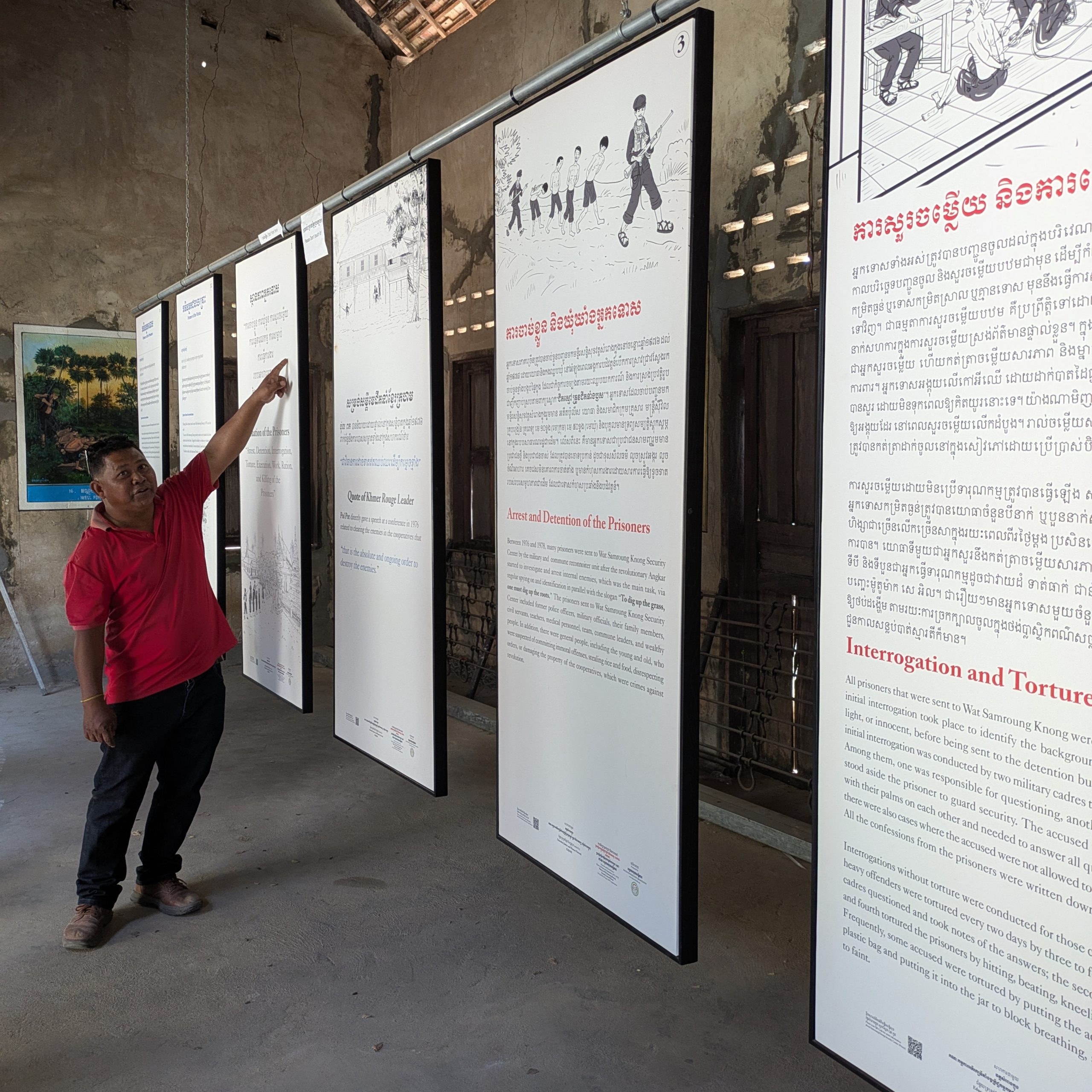
Following this, we’re taken back to Wat Samrong Knong where Tony explains some of Cambodia’s troubling history
This temple was converted into a prison over the regime of Khmer Rouge from 1975 to 1979 – this was the informal name given by the then King Norodom Sihanouk to the Communist Party of Kampuchea who were against him from the 1960s
We hear that 90% of the funding of the Khmer Rouge was provided by the Chinese and even the UK and US were in support, with the latter contributing over $85 million over the cold war period…
The Khmer Rouge converted this temple and surrounding buildings a security centre creating a hub of forced labor, torture and genocide
We hear from Tony the ways his own family suffered – he lost two siblings because they stole food for being hungry and both his parents were considered enemies of the state, being a teacher and a soldier, and fled with their other children

In this complex alone, over 10,000 people were killed and the memorial to this contains some remains of those murdered as well as artwork detailing their suffering, including cannibalism
To change up the tone, we head on and learn about more Cambodian delicacies from the Rice Paper And Spring Roll Restaurant – rice paper and sundried snacks are on the menu

The shop that we visit makes 2,000 per day and they can be eaten in a variety of ways, including as fresh and fried spring rolls
After this, we’re taken to Ek Phnom Pagoda to admire the giant buddha

Sadly, we don’t have time to go in and have a proper look around but this place of worship that dates back to creation in the 11th century
Tony is getting hungry so takes us to a restaurant on the Sangker River to enjoy some traditional filled turmeric pancake which you construct into a cabbage leaf to eat
Onwards from here is the Bamboo Train Ou Srauo Laou – in the 1930s, French colonists built the Cambodian railroad to transfer rice and other goods between Phnom Penh and Poipet for trade purposes
Over the time of the American-Viet war and the Khmer Rouge, a large proportion of the track was bombed and removed but locals were quick to use scrap that had been leftover from tanks and other vehicles to mend and reinstate the track

We each pay $5 for a ride down the line where we’re taken to some shops, see that the railway is still used by actual trains and then taken back to the start
Following this, we are taken to Phnom Sampeau / Sampov to hear about more history of the Khmer Rouge
This hill has many a Buddhist temple on it and these also became converted spots for prison, torture and killings; with it having steep edges and many daylight shaft caves, it was an ideal spot
We’re shown the various caves – lakhon and kbalkmoch caves – that people were lured into as men and women had separate chambers to be executed as well as children

Some of the remains were dug up again to be shown as a reminder of this terrible tragedy
After here, we go to the other side of this mountain to get a view of the sunset with the family of monkeys that live here
Once the sun has gone down, we’re taken down the mountain and to a spot beside this hill where we’re given a beer each to admire the mountain-carved deities and awaiting the million of bats to exit Bat Cave

It gets a bit too dark to see them properly but they do start to emerge as the light disappears and we hear that there are so many that it takes an hour and a half, at least, for all of the bats to leave the cave!
With most of our group getting tired, we make the journey back; once dropped off at Pomme Hostel, with the lady we’ve acquainted, we head to The Lonely Tree Café for dinner
Following dinner, we pop by the waterfront again and get a view of the Battambang sign before wandering back to the hotel to sleep


Leave a Reply