We have to make sure we get out of this place before 10 as they’re strict on their check out policy!
Successful, we get to Country Mile Café for coffee – it’s as big as our heads

Some time for working out a plan for today before we make a start with it
Back to Malanda Falls Conservation Park for a stroll where we saw the Platypus yesterday – no more sightings other than some more of the Turtles and a lizard lazing on a log
Next, we head to Winfield Park as it gives us a chance to potentially spy a Tree Kangaroo
We stop for lunch too and walk with it combing the tree line in hope – nothing sadly but we did get to see a pretty Butterfly

Onto Lake Eacham again, this time walking the 3km circuit around the entirety of it
We’re here as there might be a chance for Tree Kangaroos but we don’t get lucky – instead, we see a Musky Rat Kangaroo scuttling and an Eastern Water Dragon

After, we get to Yungaburra Platypus Viewing Platform to try this again – to no avail
We need to go to Atherton as we need to pick up dinner from Woolies and then to Carrington
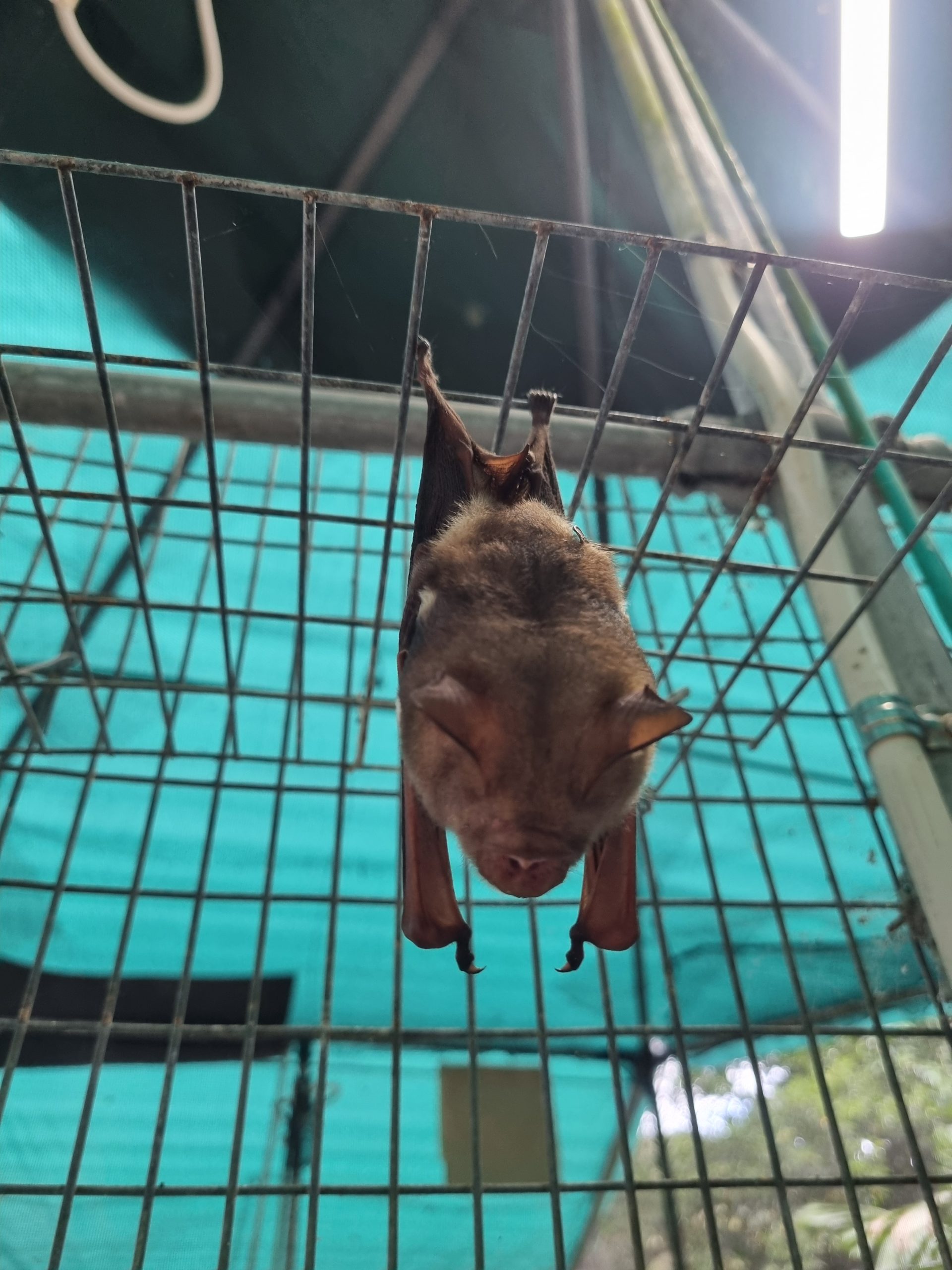
Tolga Bat Hospital is here and they do tours occasionally – we’ve booked on and get led around by Jenny
Here are some facts we learnt:
- 20% of the world’s mammal species are bats – it goes to 25% for Aus alone
- Most of the world’s bats are micro bats – 70 of the 82 in Aus are micro too
- Bats aren’t blind – most have bad vision with small eyes and one species, the Ghost Micro Bat, have big eyes where they use their eyes for hunting as well as echo location
- Vampire bats only exist in central and south America, unlike what you might think with stories such as Dracula
- Some of the bats have been here for over 10 years – unfortunately, some of their wounds are too great to fend for themselves in the wild again, others are born here and are unfit
- We’re shown two Diadem Leaf-Nosed Bats – you can see them echo located on only 60 megahertz, when they move their ears, which is communicated through their nose

- All, but one or two, micro bats keep their wings beside them as they’re sleeping – only megabats wrap themselves with their wings
- The next bats are Tube-Nosed Fruit Bats
They are incredibly ultraviolet – this is how they appear to one another

- Bloom Bats are an example of a megabat that doesn’t meet the name – very tiny bat that eats fruit
- Bats are intrinsic pollinators as they travel extensive distances which they carry pollen the whole way – some records include 300km in one night and 500km in two nights
- Next bat is a Yellow-Bellied Sheath-Tail Bat – they crawl backwards quite efficiently!

- We hear about a Long-Eared Bat – one was brought in last night and was speedily helped and released back into the wild, thankfully
- Bats are very sensitive to heat – they’ve had several incidents all over Aus where tens of thousands have literally dropped dead in one day due to heat stress
- We go into the Flying Fox area – it’s tick paralysis season so there’s a lot in care at the moment ????

- There are even bats on the outside of the enclosure – Jenny tells us this is because they are likely some that were being looked after and released but wanting to be with the bats they bonded with here
- It’s also mating season, lots of noisy naughty business happening!
- Megabats actually reverse their orientation to pee and poop, unlike the micro bats
- Bats are pregnant for 6 months and then breastfeed for 6 months – only having one baby and it’s a big ol’ commitment!

Time to dash! We have to go 152km South East, to the coast, for our place to stay tonight
Along the way, we refuel and see a car that’s not had the best day (at what ever point this accident actually occured)

We check in and get cooking – dinner tonight is a big lasagna where we add our own fresh salad

Now to relax for a couple hours to get us to an appropriate sleep time – we’re knicky-knacked!


Leave a Reply