Waking up was a little odd without any natural light, but we shower and have a coffee before hitting breakfast
Some toast and fruit – something bland as we think we’re both affected by the bad air conditions giving us colds
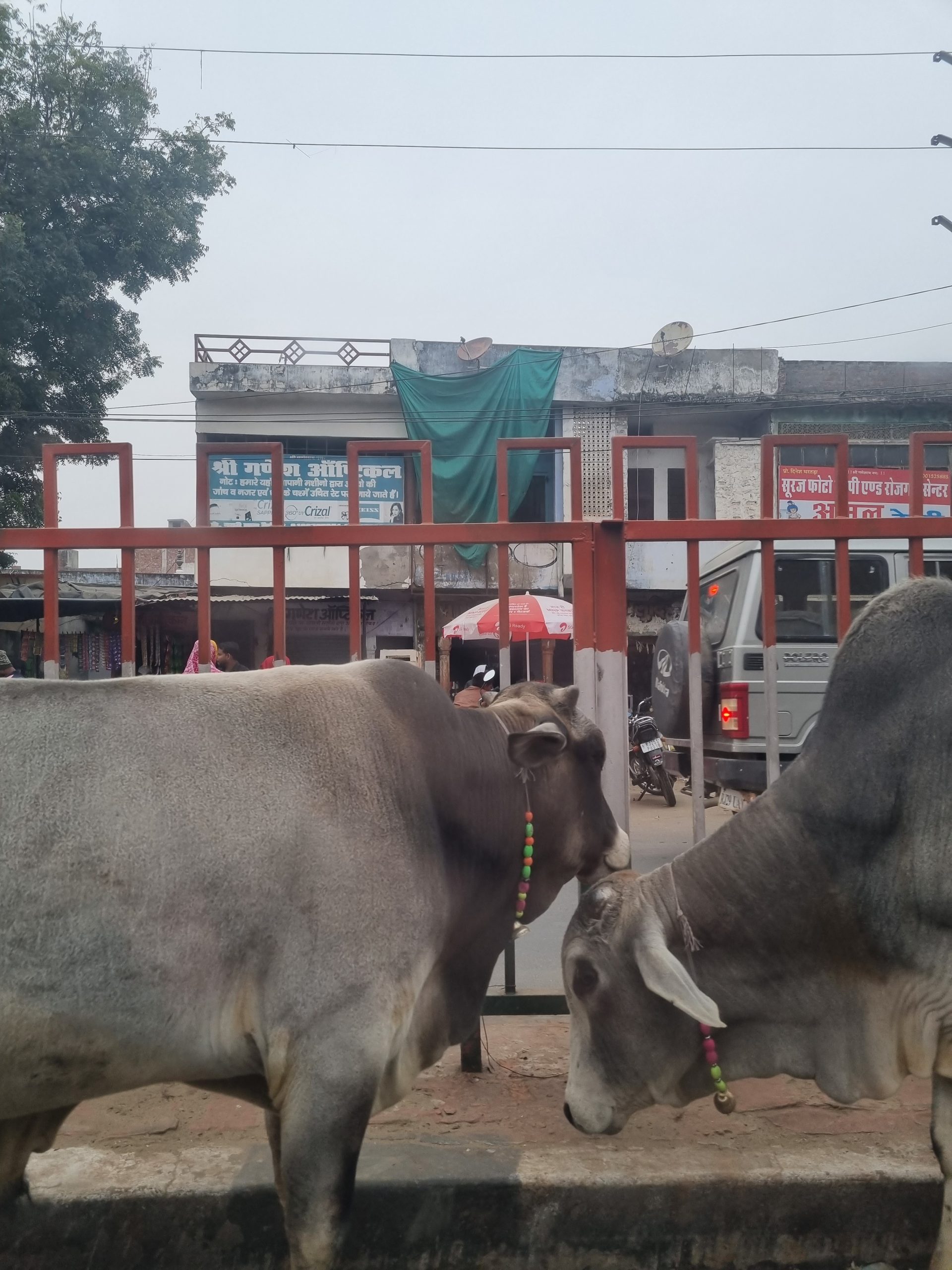
We check out of this hotel and set off in the car for our next destination seeing many a cow along the side of the road
Have to stop as a train goes over the road – all windows and doors open (seems unlikely to have air conditioning on it!)

Arrive at Fatehpur Sikri Fort (meaning victory city)
In the 1500s, King Akbar (and father of the creator of the Taj Mahal) came to this place – originally called just Sikri – after seeking all types of religious remedies to have a child

He had three wives of differing religions and was told to come here because there was a family with special powers
The king walked here bare foot from further North India, about 350 miles – true dedication to wanting an heir!
He came and was blessed and just over 9 months after, his third – and favourite – wife gifted him a boy
After this, Akbar decided to set up camp here and made it the second capital of the Mughul empire
He ordered a fort to be made which had two sections: residence and religious
We visit the residence first (Diwan-E-Khas, Fatehpur Sikri)

The gardens were previously a field for the local people to see the king and his 9 ‘gems’ or advisors hand out justice
Through to the private area which is the star of the show
We’re shown the place where Akbar the Great founded Din-i-Ilahi (“oneness of God”)

Then in the main area, is a summer palace with several floors
Right in the centre, there’s a large playing board

There’s a pool that would have previously been filled with rose water for the nice smell and encourage the ladies to take a dip

We’re guided through to the kings chambers where he had a summer and winter sleeping areas which were all connected to where his three wives could access
Finally, we’re shown where each of Akbar’s wives had their private quarters
All three were different and had the requirements to be happy in each of their religions
Though, it was clear to see his third, Hindu wife was the most cherished

Important around here, especially, as this wife was from Jaipur (a neighbouring town)
Onto the religious segment of the fort
This is an area where all people from all religions can visit and pray side by side
There are two entries and we enter from the previous King’s Gate where the royals would have entered this space

It has the Holy Tomb of Hazrat Salim Chishti (the special person who helped Akbar produce a child) and all the generations of this person are housed within the walls
There’s even a little passage way at the back which used to be a direct line to Agra fort 40km away!

We’re guided to collect a cloth that is made here and a token for people to purchase where the money is all given to support the local poor (the cloth, each day, is also given to the poor for them to make items from them)
We go into the tomb and it’s common knowledge that you gift the cloth, some rose petals and you receive a strong back to make three wishes

The other gate is the victory gate and adds to the meaning behind the name change of the area: Fatehpur means “victory city”

Akbar the Great was very proud of this city and it shows with the extent of this fort
We head back to the car and go onto a lunch spot
Rudra Mahal is our pit stop for some grub

Back on the road, many miles until our destination just yet
Brief stop, as our driver has been going for about 4 hours straight, for some tea!
Last stretch of the 282km driving trip today and we make it to our hotel for the night: Hotel Ankur Resort
We arrive! We get settled and straight out to dinner
Our driver, Yunis, knows a nearby place that has very, very fresh home-cooked food

Stuffed and happy, we head back to our bed for an early night ????


Leave a Reply